




Adopting secure hardware now easier, faster and more affordable, lowRISC reveals
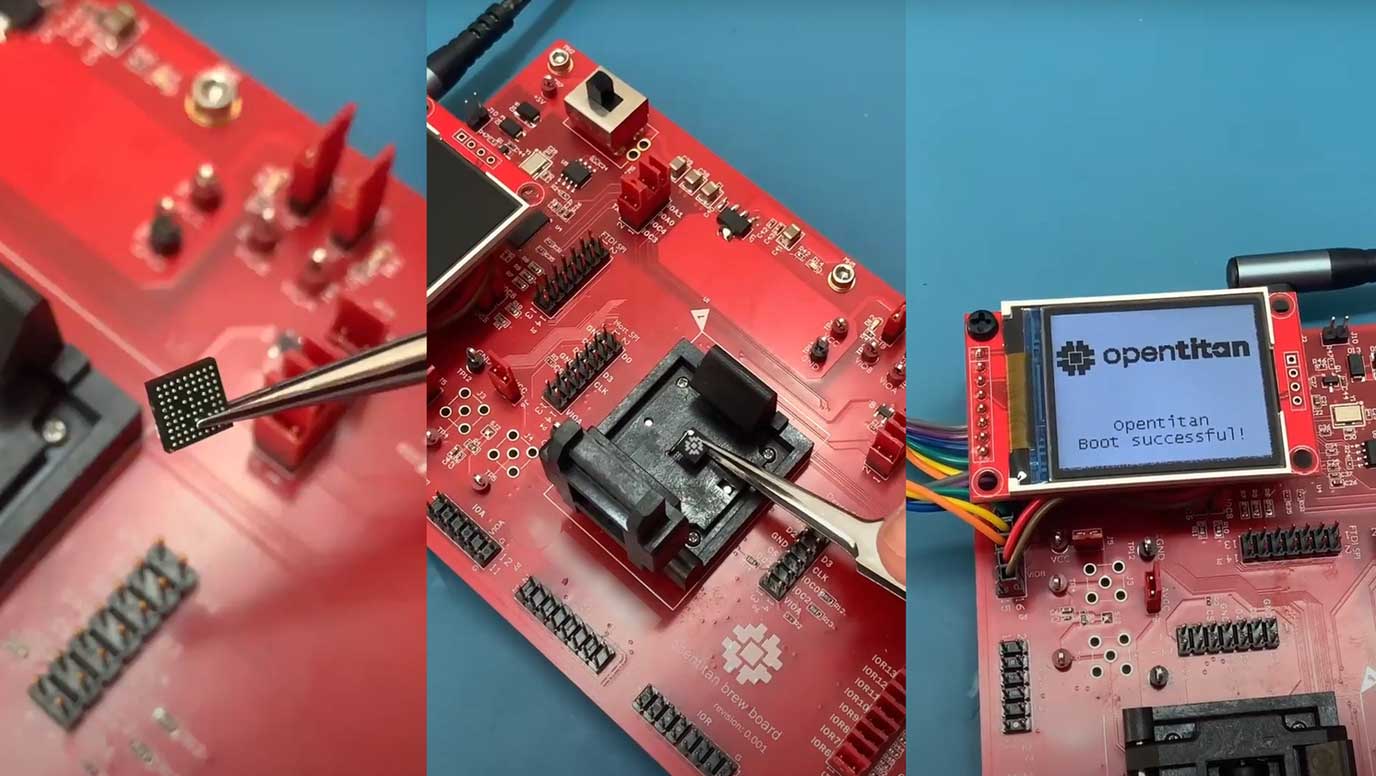
With the introduction of silver and bronze membership tiers, lowRISC has lowered the barrier to access internal project deliverables and expertise.This will reduce the time and effort to integrate secure IP, reach production and achieve security certification of new SoCs designed by a broader range of organisations, the company discloses.
OpenTitan is an open-source hardware root of trust project. It is already the world’s most active open-source silicon project, with over 250 contributors, 22,000 commitments and 445,000 lines of system verilog.Verilog is an IEEE-standardized hardware description language (HDL) used to model, simulate, and synthesise digital circuits at various abstraction levels, commonly RTL. It is widely used in FPGA and ASIC design for defining logic structures, timing and data flow.
From the start, lowRISC® adopted a membership-based model for OpenTitan, with a small number of committed partner organisations who invested both monetary and engineering resources to create its first implementations.
It believes that a membership model is fundamentally right for an open-source silicon hardware project, since it provides protection against IP pollution; it provides a Governing Board of committed partners steering the project and it delivers a stable source of funds to maintain the critical engineering infrastructure for the project: servers, continuous integration systems, boards and tools.
The OpenTitan membership model has proven highly successful, with the delivery of two top level SoC designs: the Earl Grey discrete Root of Trust, and the Darjeeling integratable SoC subsystem. These designs have both gone into commercial production devices, which shows our partners’ trust in their high level of quality.
With the release of Earl Grey and Darjeeling, the OpenTitan project has entered a new phase of deployment and many more organisations have become interested in its adoption to add security capabilities to their SoCs.
While it is possible for anyone to take an SoC to market based on OpenTitan IP, being a member brings substantial advantages, such as access to expertise from lowRISC and other OpenTitan members, as well as private deliverables created for the implementation and certification of the first OpenTitan-based SoCs.
To accelerate this new deployment phase, lowRISC has productised these private deliverables, which include integration documentation, tooling and checklists, as well as documentation for Common Criteria certification. It has also introduced lower-cost tiers to make them accessible to a much broader range of organisations, including startups, academia and not-for-profits.
lowRISC and other OpenTitan partners will continue to add new capabilities, improve existing IP blocks, develop new ones and create new top level SoC designs.
Google is among major tech supporters of the initiative: Cyrus Stoller, Group Product Manager, Google, said: “Google is excited to see this next evolution in the OpenTitan ecosystem.”
You can contact lowRISC via info@lowrisc.org or get-involved@opentitan.org.