


Cambridge and London dominate innovation rankings through patent power
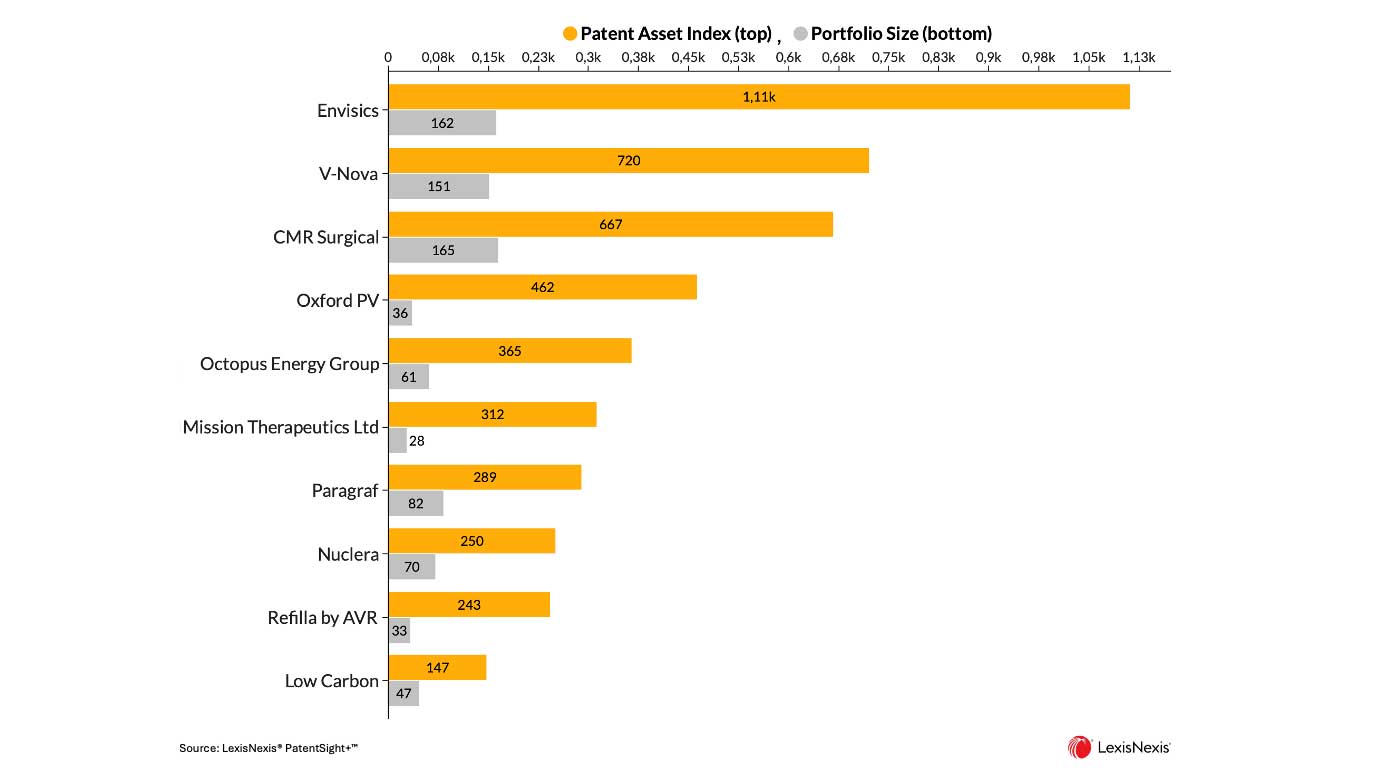
CMR Surgical in third, Paragraf at six, seventh placed Mission Therapeutics and Nuclera in eighth fly the Cambridge flag in the first LexisNexis ranking of the UK's Most Innovative Startups, based on their patent assets. Milton Keynes and Oxford , both also in our online circulation area, each have one star-turn to make up the top 10.
Scoring eight out of the top 10 hands Cambridge and London a crown that thousands of startups are scrapping to claim.
The patents for the four Cambridge companies span a wide range of different technologies, unlike some communities where the startup sector is dominated by a single industry - such as Boston and biotech in the US. And the company accepts that there are several interpretations worldwide of what exactly constitutes startup status - and that is rarely judged alone by either age or wealth generated.
Marco Richter, Senior Director of IP Analytics and Strategy for LexisNexis Intellectual Property Solutions, tells Business Weekly: "LexisNexis data shows Cambridge is an innovation powerhouse, placing as many startups among the UK's top ten as the massive London metropolitan area. Like Stanford, Harvard, and Tsinghua, the University of Cambridge has fostered an entrepreneurial ecosystem that brings together academia and the private sector to launch and build great businesses."
Authors of the new report stud the current innovation scene into a polished assessment of UK innovation down the years.
The report says: "From the birth of the Industrial Revolution, the United Kingdom has occupied a leading role in global entrepreneurship and innovation. History-changing British inventions range from the steam engine (first patented by Thomas Savery in 1698) to the flying shuttle that transformed the textile industry (patented 1733), hydraulic press (patented 1795), Portland cement (patent 1824), pneumatic tyre (patented 1847), Bessemer steel (patented 1856), and the jet engine (patented 1930), among countless other innovations."
LexisNexis Intellectual Property Solutions conducted an analysis to identify the ten most innovative startups in the United Kingdom, based on each company’s Patent Asset Index, a proprietary metric from LexisNexis that reflects the value of a company’s patent portfolio. The Index combines the size of a company’s portfolio with the technological value and geographic scope of each of its patent-protected inventions.
By evaluating that quantifiable measurement of innovation for leading private UK companies founded since 2010, this analysis identified the 10 UK startups whose patent portfolios have the highest values, providing an objective view of which startups are leading innovation across Great Britain.
“Innovation has always been part of the UK’s DNA, and today’s most dynamic startups are carrying that legacy forward through world-class research and breakthrough technologies,” said Richter.
“By using patent analytics to measure not just the quantity but the quality and global impact of each company’s inventions, we can identify where real technological leadership is emerging. These findings highlight the UK’s continued strength as a hub for high-value innovation that drives competitive advantage across industries.”
A major driver for innovation in the UK is the research taking place at the country’s top tier universities, as highlighted by the number of companies on the UK Most Innovative Startups list that were spun out of major seats of learning.
Among those are Oxford PV (University of Oxford), Mission Therapeutics (University of Cambridge), Paragraf (University of Cambridge), and Nuclera (University of Cambridge). In addition, CMR Surgical came out of the Cambridge ecosystem, although not directly from the university, and another company, Deep Render (Imperial College London), would have made the list at #10 if it had it not been acquired by InterDigital.
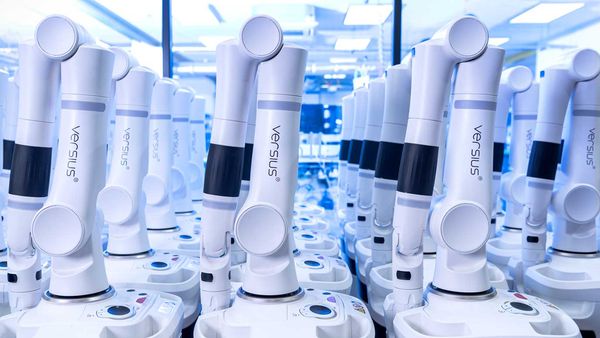
CMR Surgical is a global medical devices company dedicated to transforming surgery with Versius, a next-generation keyhole surgical robotic arm. CMR is committed to working with surgeons, surgical teams and hospital partners, to provide an optimal tool to make robotic minimal access surgery universally accessible and affordable.
Mission Therapeutics is a clinical-stage biotech company discovering and developing innovative therapeutics that promote mitophagy, the quality control process cells use to remove dysfunctional mitochondria, thereby safeguarding their health and function.
Effective mitophagy is particularly important for the ongoing health of neurons as, unlike most cells, they do not self-renew throughout an individual’s lifetime.
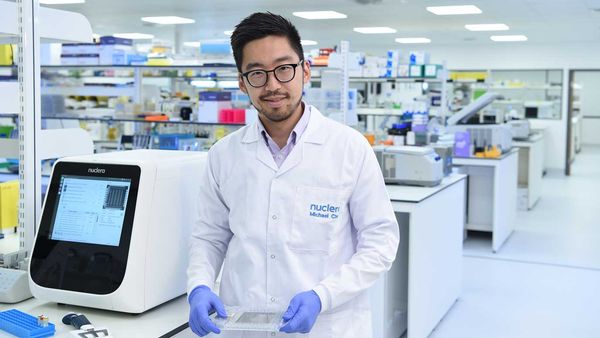
Nuclera is the pioneer in bringing rapid protein prototyping to the benchtop. It makes proteins accessible through eProtein DiscoveryTM. Through its technology, it accelerates breakthrough improvements in human health and empowers life science researchers with easy access to target proteins.
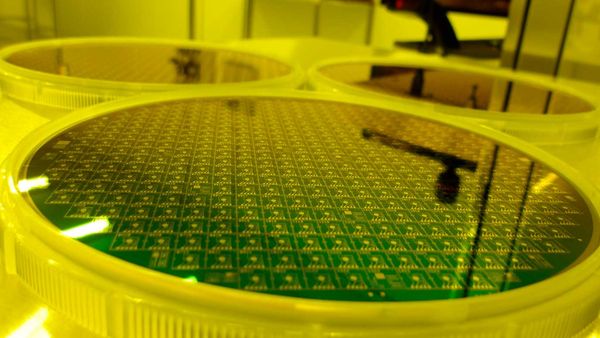
Founded in 2015, Paragraf is pioneering the development and commercial adoption of graphene-based electronic devices using industry-standard semiconductor processes. With lines of magnetic sensors and GMS already in production and other advanced semiconductor devices in development, Paragraf’s proprietary graphene growth process unlocks the full potential of this remarkable material.
Simon Thomas, Co-Founder and CEO of Paragraf said: “We are grateful to LexisNexis for recognising the hard work our employees have done over several years to develop proprietary processes for developing the next-generation tools that will drive the future technology applications. With our Huntingdon manufacturing facility completely coming online and our Somersham labs transitioning to full-time R&D, we anticipate further expansion of our patent portfolio for many years to come.”