




Child's play as CMR Surgical wins debut paediatrics approval
It marks the company’s first regulatory clearance for treating children. The approval has been received for abdominal surgery in youngsters under the age of 18.
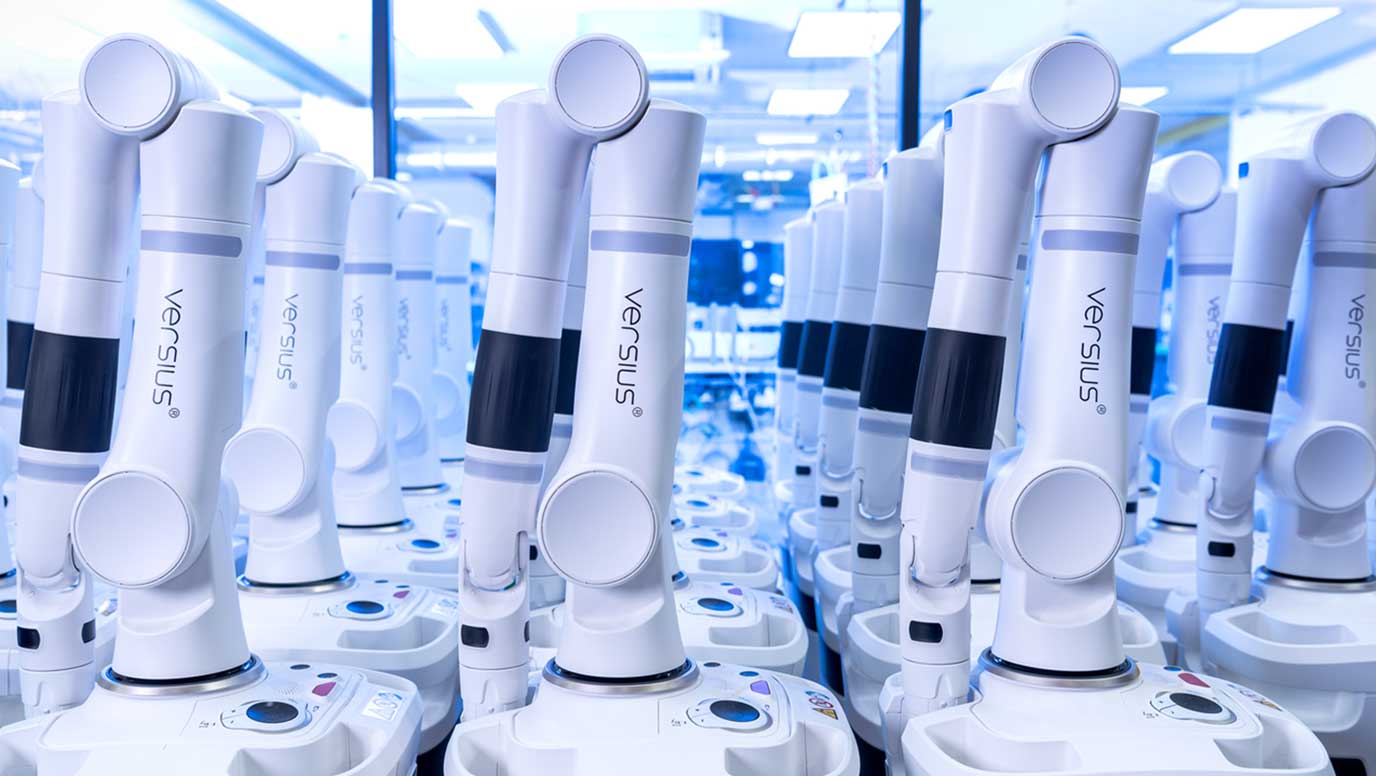
Versius’ uniquely compact and modular design allows the system to be set up in a way that enables optimal access for the surgeon and their teams. With a compact instrument diameter and maximal dexterity, the system is optimally designed for the paediatric anatomy.
The system’s portability allows it to seamlessly integrate into virtually any operating room and be easily moved between departments.

Mark Slack, Chief Medical Officer at CMR Surgical, said: “Securing CE Mark approval for Versius in paediatric surgery is an important milestone for CMR Surgical and for the future of robotic-assisted minimally invasive surgery.
“The approval opens a new, high value segment of the market, whilst validating the strength and flexibility of our technology and we look forward to extending the benefits of our minimally invasive technology to this important patient population.”
Ewan Brownlee, Consultant Paediatric Urologist at Southampton Children’s Hospital and Chief Investigator for the Versius Paediatric Trial, said: “As a paediatric surgeon, I’m delighted that Versius can now benefit more children in the UK and internationally.
“In our study, its modular arms and small instruments proved well suited to paediatric anatomy, and we have already completed almost 150 procedures across three centres in patients from just a few months old upwards. With approval for use in under-18s, we will be able to extend the benefits of minimally invasive surgery to a wider patient population.”