



FactTrace emerges from stealth as Loubna Bouarfa fights misinformation
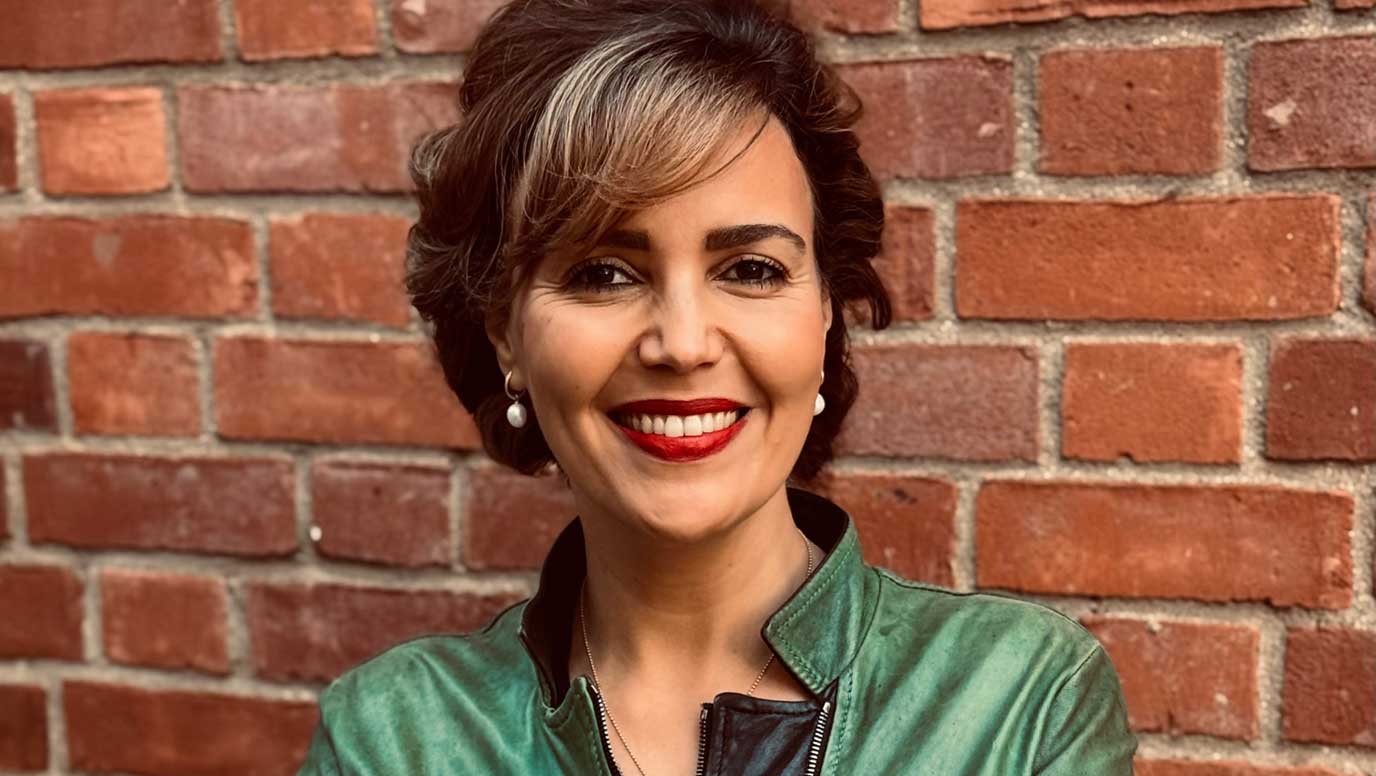
This is a business for its time and one suspects for times to come. Bouarfa says: “FactTrace isn’t a single use-case product - it’s infrastructure technology. It gives important facts a small digital fingerprint so they can be recognised, checked, and traced wherever they appear, whether they’re reused by people, systems, or AI.”
The company and its concept are already finding ready ears. Bouarfa says: “Right now, our early discussions are particularly with government and public institutions in areas where accuracy, security, and digital sovereignty really matter.
“Typical examples include verifying AI-generated reports and chatbot responses before they are used or published, ensuring forensic and evidentiary material stays faithful to source as it moves across systems, and protecting the consistency of official information during elections.
“More broadly, FactTrace is designed for any organisation where facts matter. As AI rewrites information at scale, organisations need a way to verify that what’s being published or generated still matches their own trusted facts. FactTrace provides that missing layer, making facts traceable infrastructure rather than something that relies on manual checks or interpretation.”
Bouarfa sold OKRA.ai to Envision for an undisclosed sum in February 2023. Prior to the acquisition, OKRA had raised $4.16 million in a Series A funding round in March 2018.
She told me ahead of launch how the seeds of the new business were sown. “After OKRA.ai was acquired and I stayed on for a bit to integrate the team, I then took time to step back. An old question I’ve been carrying since my early days in signal processing came back very clearly: when things get transformed, reused, and distorted, what actually stays the same?
“In my twenties, working on video fingerprinting (e.g. Shazam E.Q for video), I became fascinated by the idea that a physical signal could be noisy and imperfect but still carry a stable identity we call a 'fingerprint. That intuition never left me and I took it through surgical AI, healthcare systems and OKRA, watching how small drifts in information quietly change outcomes.
“Over the last few years, as misinformation became harder to address, that question returned in a new form: what if meaning itself could be fingerprinted? If the same idea is said in different words, could it carry the same 'QR code'? And if not, could we see how truth drifted along the way?
“That question became FactTrace, which we started building quietly within my incubator, Cervox.ai, after I left OKRA, and which we’re now bringing into the open.”
FactTrace is currently self-funded through Bouarfa's incubator, Cervox.ai. She says she is not planning to raise capital until she sees clear adoption taking shape with early institutional partners.
“Once that usage is established and we understand how it’s being used in practice, we’ll decide on the timing and size of a round to accelerate scale,” she says.
FactTrace is an infrastructure that makes important facts recognisable wherever they are published. It generates a small digital fingerprint for each fact that matters — like a barcode. That fingerprint makes it possible to check whether something written by a person or generated by AI still matches the original fact, even if the wording has changed.
This allows organisations to clearly separate:-
● A truth corpus: the facts they stand behind
● An opinion corpus: everything derived from those facts — summaries, reports, media coverage, AI outputs, and internal interpretations
● FactTrace fingerprints the truth corpus and continuously checks new content against it
Cross-sector use cases:-
● Official policy statements and guidance
● Election information and results
● Public safety and health instructions
● Forensic records and evidentiary material
● Approved responses for citizen-facing AI systems
Opinion corpus uses include:-
● Media summaries and commentary
● Internal briefings and reports
● Public communications
● AI-generated chatbot responses and summaries
There is much more, on which the company is best placed to elucidate, but it is hard to think of an area of life or business in which the technology would not be useful - such as checking healthcare and general medical records, insurance and other documentary validation. As Bouarfa says, FactCheck “makes facts behave like digital assets — recognisable, verifiable, and traceable.”
The company’s website includes the telling line: ‘Truth you can verify. AI you can trust' - you can find out more at facttrace.ai.