


HoverAid’s heroics saving and extending lives on an island over 9,000 miles away
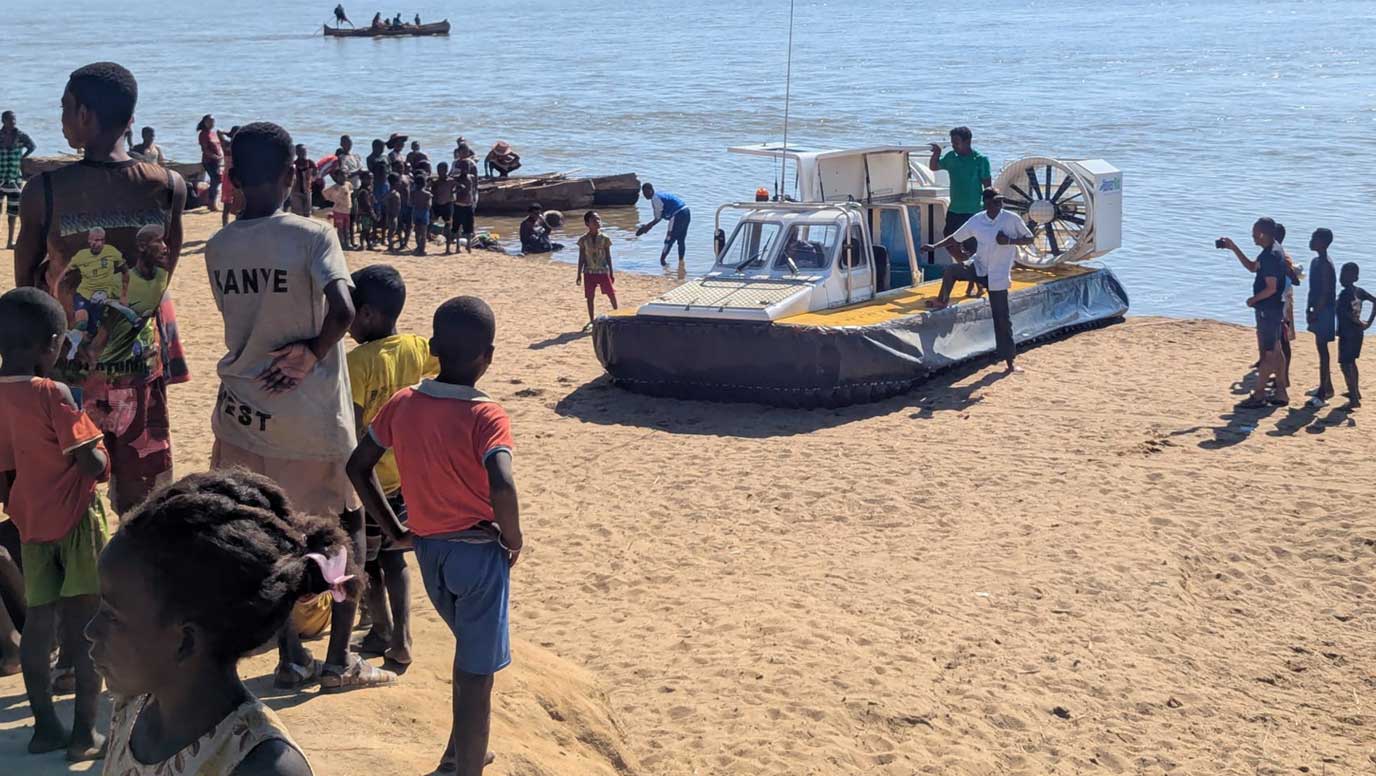
In a land where the average life expectancy is short, with a median age of just 19 and deadly diseases abound, the arrival of HoverAid’s team and heroic medical volunteers is a link to life changing support and sometimes survival.
Why do they arrive and get around by hovercraft? Because the craft can zip across land and water with equal ease. And there is lots of water in Madagascar – it’s a country where most live close to the many rivers, there are few roads, and the rainy season can last 4-5 months.
The rainy season is also characterised by hot, humid weather and a high risk of tropical cyclones. Against that often vicious backdrop, wells need to be dug to provide securely available clean water; people of all ages need medical aid; they need education – not just learning NOT to drink dirty water but to develop good practices for health and sanitation.
Sometimes schools and health posts destroyed by storms must be rebuilt; skills must be transferred to construct more robust buildings to withstand the inevitable future weather and ensure children have a place to learn crucial literacy and numerical skills.
HoverAid’s HQ oversees the building of its bespoke hovercraft in tts UK workshop. Its base in Madagascar is home to HoverAid’s logistics and aid & development experts and local medical volunteers who bring expert clinical skills to provide essential healthcare, surgical operations, and tests to remote communities who would otherwise be forgotten and often have no medical provision.
As well as ‘pop-up’ clinics, wells are dug, schools are built, health education is provided and village coordinators trained. Sometimes the needs are basic, but common in a country where the staple diet is rice and severe malnutrition and infant mortality all too common.
People young and old regularly walk 50+ kilometres to a HoverAid clinic for medicines or treatment that has often saved lives. Black Death, AIDS, dysentery, bubonic plague: They are all threats to life in Madagascar which, to those who do not know, is located in the Indian Ocean off the southeastern coast of Africa,
The country features diverse ecosystems, from tropical rainforests to arid deserts, and faces challenges with poverty and environmental conservation.
Larger than California and almost 3x the area of Great Britain, Madagascar was described by the UN last year as the fourth poorest country in the world.
HoverAid has a collaboration with Deichmann – a German shoe manufacturer with a conscience – and an outpost in The Netherlands. These, plus a flow of donations from loyal supporters in the UK, and fundraising events, help to pay for HoverAid’s work; otherwise it is a case of continuous searching from other sources like grants from trusts and foundations that always have many calls upon their limited pots of money. Government funding is, sadly, not available, from the UK or elsewhere.
With millions caught in a struggle for survival – over 80 per cent of the population in Madagascar live on less than $2.15 a day (the recognised ‘International Poverty Line’) – HoverAid’s heroes and heroines can hardly afford to take a breather. The Christian humanitarian charity has just moved its offices to The EpiCentre in Haverhill and is already hatching fundraising events with fellow tenants.
And to say the charity could use more and bigger donations from the region’s corporate community – notably High-Tech and Big Bio – is a candidate for understatement of the century, according to John Greaves, the CEO of HoverAid Trust.
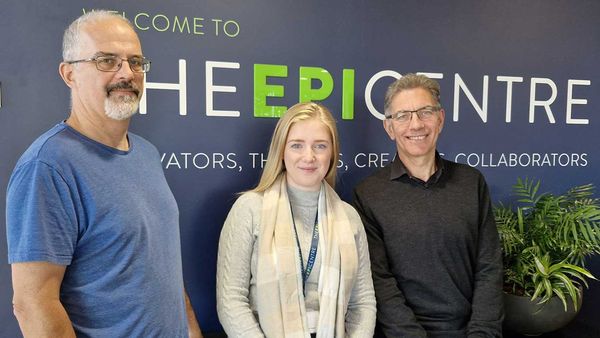
The HoverAid story began back in 1969 when it was discovered that hovercrafts were the perfect solution for navigating tricky terrain – gliding over shallow waters, river systems, rapids, sandbanks, mudflats, ice and swamps where ordinary boats can’t go. “We officially became a charity in 1991, and since then, we’ve been dedicated to one clear goal: reaching the unreachable,” Greaves says.
HoverAid is supporting several locations in Madagascar and has three hovercraft there, as well as a fleet of 4*4 vehicles and two off-road Unimog trucks which double up as mobile clinics. “If it is medical work that is needed, we take a team of clinicians, doctors, dentists, ophthalmologists and ultrasound people out there with their medical kit. We have 80 Malagasy medics who volunteer with us for six weeks of the year from the main hospitals in the capital. We have computed that 17,464 people received care through our efforts in 2025.”
HoverAid’s support for Madagascar is unstinting but it also costly. Given the conditions in which its teams and volunteers work in isolated places across the island, and those that the inhabitants they are helping are forced to endure just to stay alive, it has to be hoped that this region’s corporate communities and others elsewhere internationally will want to get involved: And not only step up to the plate but put large donations into it – in cash or kind!