



New report reveals BioMed Realty’s Granta Park as a global life science power player
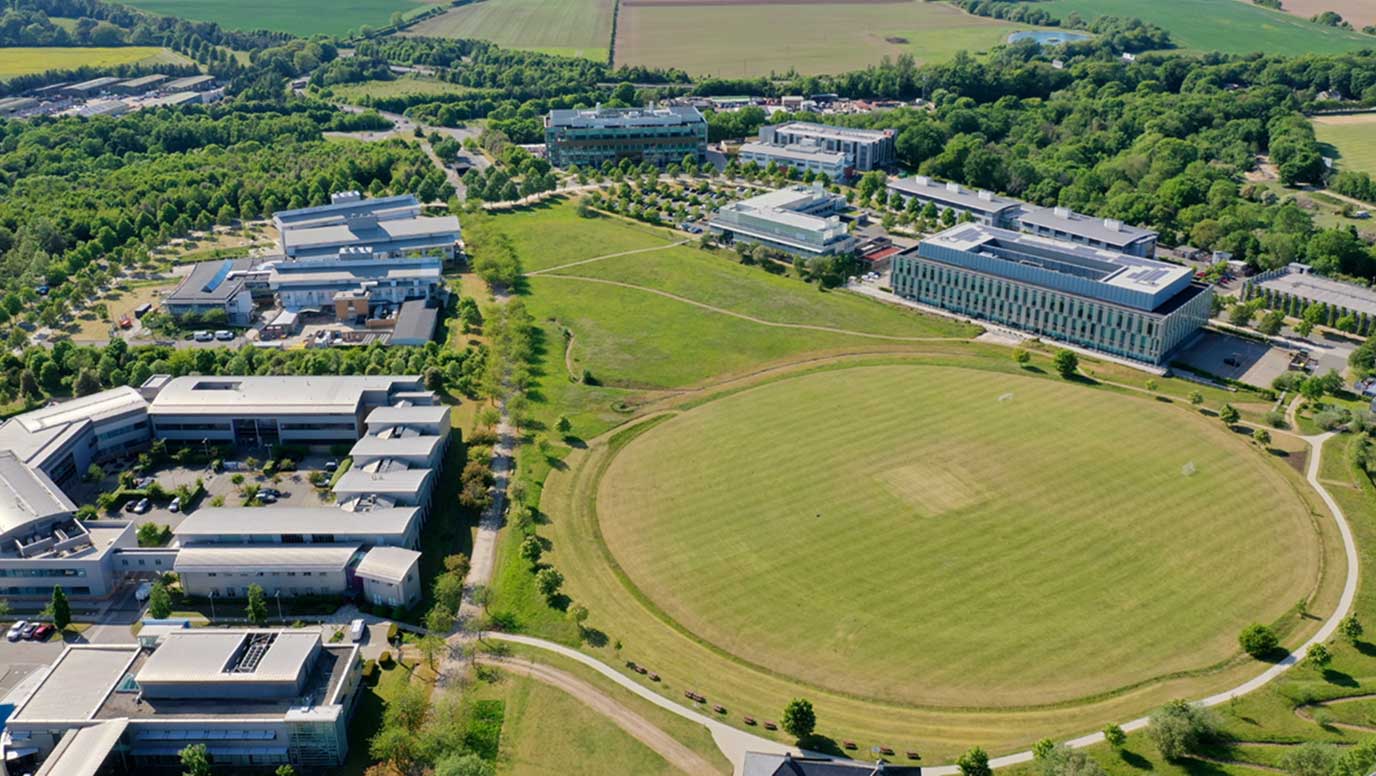
The economic impact assessment, shared with Business Weekly by BioMed Realty, shows that there are nearly 3,850 jobs based on floorspace owned and operated by BioMed Realty at Granta Park, of which over 3,750 are employed by companies engaged in life sciences R & D.
This represents more than 15 per cent of total life science and healthcare jobs and over 5 per cent of all knowledge intensive jobs in the Cambridge corporate economy.
BioMed Realty’s footprint at Granta Park contributed around £1.44 billion to the UK economy in 2024. This includes a direct GVA impact of £577 million, an indirect (supply chain) impact of the same order again (£577m) and an induced impact of £284m from the spending of wages and salaries in the wider economy.
Andy Cosh and Giorgio Caselli, CBR, University of Cambridge comment: “Granta Park plays a significant role in the Cambridge life sciences cluster. Our survey of employees working on the campus shows them to be deeply engaged in research as we would expect, but it also shows them to be embedded in the area – half were recruited locally and two-thirds expect their next job to be local.
“The future growth of the life sciences companies at Granta Park will play a central role in keeping the Cambridge cluster competitive and supporting wider growth across the local economy.”
The impact report has been prepared by Cambridge Economic Associates Limited in association with The Centre for Business Research at the University of Cambridge and real estate giant Savills. The importance of the Cambridge cluster to the UK is observed through innovation metrics, such as patents per capita where it ranks in first place, driven by knowledge-intensive sectors, including life sciences and technology.
Cambridge’s global position has been enabled by its concentration of research institutes alongside the University, important leading industrial anchors from the pharmaceuticals and biotechnology sectors and, critically, R & D infrastructure including the availability of high quality research campuses providing high quality commercial floorspace, the report stresses.
Positioned in the sub-region’s Southern Research Cluster, Granta Park is said to host a thriving community of life sciences companies, including global industry leaders and dynamic research-focused firms.
The report authors say the Park has a unique blend of established biopharmaceutical companies including Pfizer, Illumina and Gilead, working alongside various biotech startups and established companies including T-Therapeutics, Nasdaq-quoted Bicycle Therapeutics and Amphista Therapeutics. These companies carry out a significant amount of R & D activity and contribute to making the Park a powerful location for life sciences research and discovery, the report says.
The authors add that Granta Park provides essential grow-on space for both developing and established life science companies in. A high amenity environment, enabling Cambridge to realise the broader economic benefits associated with retaining early spin-out and startup companies as they grow.
The research adds that companies at Granta Park are supporting UK plc overseas.
They are said to have a highly international focus with most of their products and services sold outside the UK. While the longer-term contribution to the national economy from tenants’ scientific endeavour has not been estimated, companies in floorspace had R & D spend of at least £1bn in 2024, the last year figures were recoded before the report was concluded.
It adds that tenants are also supporting the broader sub-regional supply chain through procurement of a diverse and strategically important range of goods and services.
While the report notes what it calls the huge potential for Cambridge to become europe’s answer to Silicon Valley, it adds that there are significant barriers to enabling its future growth, particularly in out-of-town R & D clusters like Granta Park.
A shortage of housing, lack of connected public transport and emerging bottlenecks in energy, power and water are all cited. Transport into Granta Park should receive priority in the latest review of these issues, the report urges.
The full report, giving greater detail of the employee profile, technology developed and the pluses and minuses that Granta Park is dealing with, are available in the full report which can be accessed at:- https://grantapark.co.uk/media/oxbnl4si/granta-park-economic-impact-report.pdf