



Optics are great as Arm builds on its 35th anniversary

Hermann Hauser, co-founder of Acorn, knew. Robin Saxby, who was brought in to lead 12 engineers into a local barn and oversee the venture knew. The core engineers had no doubts whatsoever as they began to fashion what was to become a world leading superchip design business. The wider corporate population at the time simply didn't understand the proposition and its potential.
They know now!
Despite early financial issues which required a lot of invention to resolve and keep Arm alive, let alone on course for spectacular global growth, the business appeared destined from birth to become a world great.
Thirty-five years young and still growing, Arm has this year fashioned a new headquarters at British Land's Optic building off Fulbourn Road in Cambridge.
At its other 'home' in the US, Arm has seen its Nasdaq share price steadily make up ground on its 52-week high and has a market cap of $144.20 billion. Its ecosystem features all the world's technology greats. Its technology reaches from the edge to the heart of compute and doesn't miss a single artery on its journey around the body corporate.
Arm has conducted its own review of the past 35 years and it really is compulsive reading. Its news team reports as follows:
“35 years ago, computing was heavy, wired, and power-hungry. Laptops were rare, mobile devices were bulky and data lived mostly in silos. The idea of billions of connected, intelligent devices seemed far-fetched in a world where performance demanded size, cost, and energy that few could access or afford.
“Arm changed that equation by rethinking how performance and efficiency could co-exist. Today, we’re celebrating 35 years of Arm innovation, and the 35 Arm-powered products that transformed how the world computes, connects, and creates.
“By rethinking how performance and efficiency could co-exist, Arm made it possible for compute to be efficient enough to fit into the smallest devices,and yet powerful enough to scale into the largest systems.
“Today, the company’s impact reaches 100 per cent of the connected global population, with more than 325 billion Arm-based chips powering the technology that connects, moves, and drives the modern world.”
As we celebrate 35 years since Arm was founded as a company, here are 35 landmark Arm-powered products that redefined modern computing, combining intelligence, performance and power-efficiency to spark global technology transformation.

The beginnings of Arm (1980s and 1990s)
The Arm DNA takes shape, with power efficiency as the design philosophy, and not just a “nice to have.” The Apple Newton led to a new commercial licensing model that revolutionised the industry and played a pivotal role in Arm’s global expansion as a company.
1. BBC Micro (1981 to 1986): While released before Arm was formed as a company, this desktop computer was the first ever device built on the ARM architecture. The BBC Micro was a huge commercial success with over 1.5 million units sold, helping to influence generations of programmers and engineers, many of whom started coding on this device.
2. Apple Newton (1993): Although not a market hit, the product was instrumental in sparking a shift in thinking. Then CEO Sir Robin Saxby realized a future beyond individual products – laying the foundation for Arm’s pioneering IP licensing model and its future success.
3. Nokia 6110 GSM phone (1997): Built on the Arm7 processor – which became the flagship mobile design for Arm – the product was a massive commercial success, and the first to feature the iconic “snake” game on mobile.
The mobile revolution (2000s)
Scaling down to empower greater mobility drove a wave of innovation, with Arm’s architectures and technologies enabling efficient, high-performance computing across mobile devices during this era. The custom design of the iPhone – which was a huge commercial success – showcased the power of deep technology partnerships built on this foundation.
4. iPod (1st generation) (2001): Built on the Armv7 architecture, the device transformed how people listened to their favorite music.
5. Game Boy Advance (2001): The first adoption of Arm technology into handheld, portable gaming consoles.
6. Blackberry Quark series (2003): Just before the smartphone explosion of the late 00s and early 00s, Blackberry played a significant role turning mobile devices into “always on” products that are vital to enterprise productivity experiences – this led to the highly successful Arm-powered Blackberry Bold series five years later.
7. Motorola Razr V3 (2004): Built on the Armv5 architecture, this was one of the world’s best-selling “clamshell” mobile devices ever, shipping over 130 million worldwide – this followed the release of the first-ever flip phone, the Motorola Star TAC (also Arm-powered), in the late 90s.
8. Amazon Kindle (first generation) (2007): The world’s first ever e-book was built on the ARM9 processor, leading to generations of e-book products.
9. First iOS and Android smartphones (2007 and 2008): The first iOS (iPhone 1) and Android (HTC Dream) smartphones were both based on Arm, setting the scene for the billions of Arm-powered iOS and Android smartphones sold today, like those in the Apple iPhone, Google Pixel and Samsung Galaxy series.
10. iPad (first-generation) (2010): The world’s first ever tablet device was built on the Arm Cortex-A8 processor, leading to the global adoption of Arm technology across tablet devices.
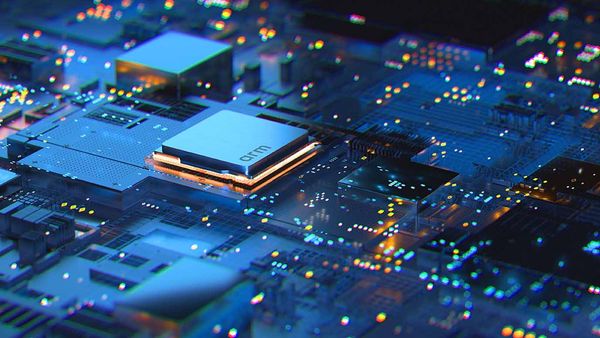
Expanding beyond mobile to IoT, data centres and automotive (2010s)
In the 2010s, Arm “scaled up” with the new Armv8 architecture helping the company move into new computing domains, including automotive, data centre, IoT, and PC. This brought Arm’s energy-efficient philosophy to an even wider range of connected, intelligent systems.
11. Nest thermostat (first-generation) (2011): The world’s first smart thermostat for homes was built on the Arm Cortex-M3+ processor, setting the scene for the multi-billion dollar smart home market.
12. Raspberry Pi (Model B) (2012): The first Arm-based Raspberry Pi platform gave many hardware designers, software developers and hobbyists the chance to experiment with solutions for the growing IoT market of the 2010s.
13. Ring video doorbell (1st generation) (2013): The first generation of the now widely available Ring video doorbell was initially built on the Arm Cortex-A7+ processor.
14. Samsung Gear S (2014): One of the world’s first ever smart watches was built on Arm Cortex-A7 CPU and Mali GPU technologies.
15. Amazon Echo (1st generation) (2015): One of the world’s first smart assistants was initially built on the Arm Cortex-A8+ processor, fueling the growth of AI-based assistants in the home.
16. Roku Streaming stick (2016): As streaming services grew in popularity, a growing number of streaming sticks hit the market, including Roku’s which was built on the Arm Cortex-A53 processor.
17. Samsung Smart TV (2016): These smart TVs, built on Cortex-A53 processor cores, became a hub for smart home automation, allowing users to control other connected devices in the home.
18. Tesla Autopilot HW2 (2016): An early integration of Arm technology into Tesla vehicles was through its autopilot systems in the S, 3, X and Y models.
19. Nintendo Switch (2017): Following on from the DS, Nintendo’s next-gen handheld gaming console was built on Arm technology.
20. AWS Graviton (2018): The first AWS Graviton CPU for the cloud and data center was built on 16 Cortex-A72 CPU cores, before adopting the Arm Neoverse platform as part of Graviton 2, 3 and 4.
21. Chromebooks (2018): Arm Cortex-A73 and Cortex-A76 CPUs, alongside Mali GPUs, powered the first-generation of Arm-based Chromebook devices, including those from Acer, HP and Lenovo.
22. MacBook Air (2019): The first-generation of MacBooks that used Apple’s own M1 chip, based on the Armv9 architecture.
23. iRobot Roomba i7 (2019): One of the world’s first robot vacuums was built on the Arm Cortex-A53+ processor.
24. Fugaku supercomputer (2020): Fugaku, the Arm-based system jointly developed by RIKEN and Fujitsu which contained nearly 7.3 million Arm CPU cores, became the world’s most powerful supercomputer in 2020, and was the first time an Arm-based supercomputer topped the list.
25. Meta Quest 2 (2020): Leading VR headset for entertainment and gaming experiences, which integrated Arm Cortex-A77 and Cortex-A55 CPU cores.
26. Mercedes-Benz S-Class (2020): Adoption of Arm CPU and GPU technologies into the automaker’s S-Class range of vehicles, with nearly every global OEM today relying on Arm technology as their foundational compute platform, across everything from safety-critical advanced driver assistance systems (ADAS) to immersive in-cabin experiences.
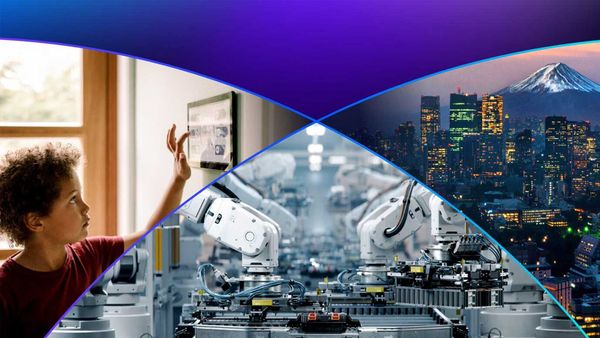
The AI-powered era: AI cloud and data centers, robotics and edge AI (2020s)
In the AI-driven 2020s, Arm is powering the era of intelligence everywhere through utilizing heterogeneous computing approaches that combine CPUs, GPUs, and accelerator technologies. Meanwhile, as Arm’s developer community grows to over 22 million worldwide, software emerges as the critical enabler that unlocks the full potential of this intelligent, connected world.
27. The Mars Ingenuity helicopter (2021): With the Armv7 architecture as its technology foundation, this was the first autonomous flight on Mars.
28. NVIDIA Grace Hopper (2022): NVIDIA’s superchip for giant-scale AI and high-performance computing (HPC) applications, which featured the Arm-powered NVIDIA Grace CPU with 144 Neoverse CPU cores.
29. Boston Dynamics Spot Robot (2023): Quadrupedal robot designed for industrial and commercial use cases was built on Arm Cortex-A CPU technologies.
30. Microsoft Azure Cobalt 100 (2023): Microsoft’s first custom silicon for the cloud is based on Arm Neoverse Compute Subsystems (CSS).
31. Google Cloud Axion (2024): Neoverse-powered custom processors for general-purpose compute and AI inference workloads in the cloud and data centre.
32. Nuro Driver (2023): First-generation autonomous L4 technology for the large-scale rollout of autonomous vehicles was built on Arm Automotive Enhanced (AE) technologies.
33. Geely EX5 (2025): Arm AE technologies featured in Geely’s first vehicle entrant into international markets, marking a clear shift in the automotive industry towards vehicles that are defined by software and accelerated with intelligent performance.
34. Meta ray-ban display smart glasses (2025): Advanced AI smart glasses built on Arm technologies with full-color, high-resolution display.
35. NVIDIA DGX Spark (2025): Arm-powered personal AI workstation allows every AI developer and researcher to have a high-performance AI system on their desk.
The future is built on Arm
Every Arm-powered product milestone above has profoundly impacted how billions of people now experience technology everyday. Throughout each decade, Arm has helped to transform the compute dynamic, making technology more accessible and enabling intelligence and performance everywhere it’s needed. As it continues to progress in the AI-powered era, Arm remains the foundational platform shaping what’s possible now and in the future - and masterminded from a Cambridge HQ.