


Space age takes on a whole new meaning thanks to LinkGevity
The firm, founded by sisters Dr Carina Kern and Serena Kern-Libera, has been backed to prepare its anti-necrotic therapeutic for deployment in space via a unique UK-Lithuania partnership with Delta Biosciences.
“We are delighted to have received this funding under the UK Space Agency’s International Bilateral Fund,” said LinkGevity CEO Dr Carina Kern.
“Alongside our collaborator in the venture, Delta Biosciences, a pharmaceutical stability specialist, we are tackling one of the greatest biomedical challenges of our time: ageing and the diseases it drives. Space offers an unparalleled testbed, where microgravity, cosmic radiation, and stress accelerate the same biological decline we see on Earth.
“By harnessing these conditions, we can fast-track the development of the world’s first therapeutic that is designed to block necrosis—uncontrolled cell death at the heart of degeneration. This breakthrough has the potential not only to transform astronaut health, but more importantly to revolutionise how we fight ageing and necrosis-driven debilitating diseases here on Earth.”
The UK–Lithuania partnership builds on both companies’ role as the only non-US participants in NASA’s Space Health Programme in 2024. Supported by the UK Space Agency and the Lithuanian Health Ministry, the project has become a flagship of pan-European collaboration.
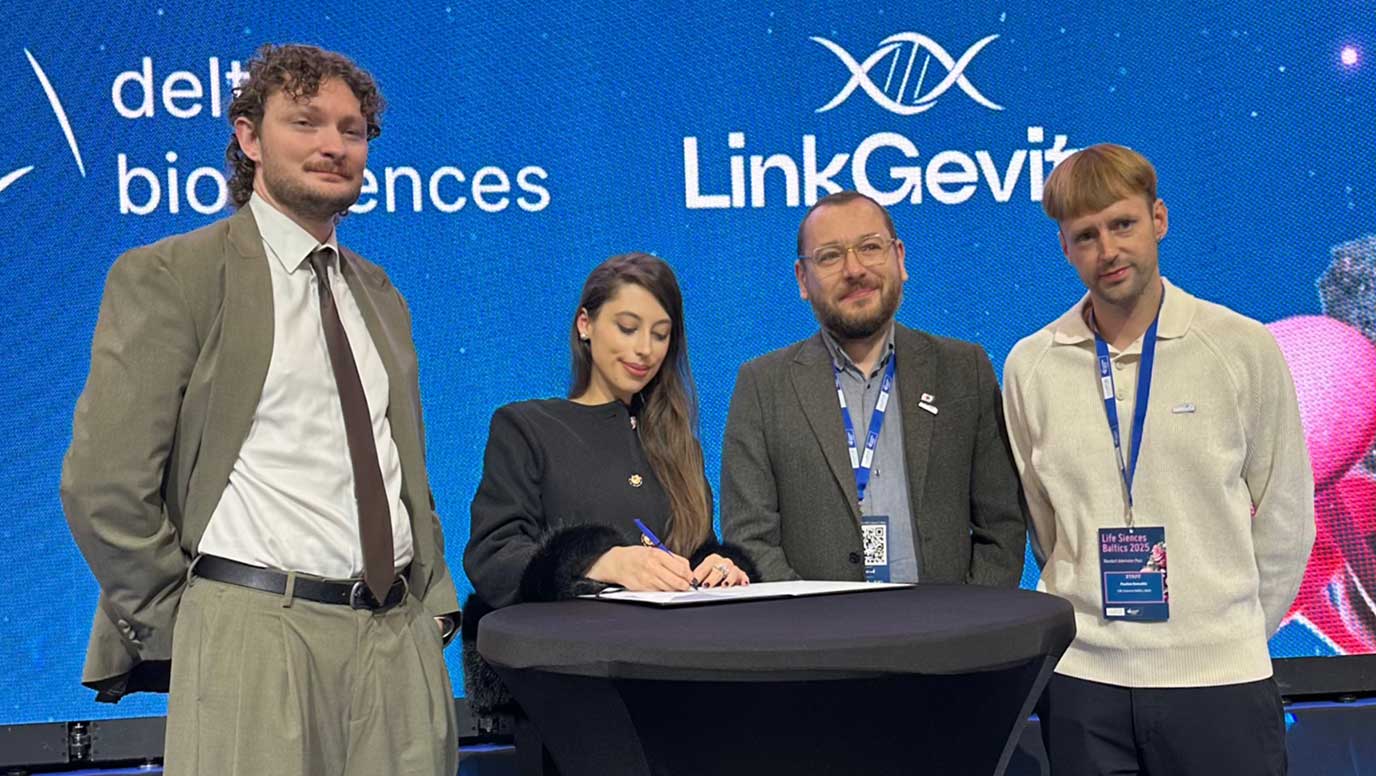
LinkGevity and Delta recently formalised their partnership with a Memorandum of Understanding at Life Sciences Baltics, the leading life sciences event in the Baltics, witnessed by international delegates.
For decades, necrosis has been a major barrier in healthcare. It has been linked to kidney failure, heart attacks, stroke, cancer, neurodegeneration and ageing more broadly. While many drugs target symptoms of necrosis, like inflammation, none have managed to prevent necrosis—and thus degeneration—at its core.
A 2025 Nature Oncogene publication described necrosis as a “fundamental driver of resilience loss and biological decline” across disease and ageing. By blocking necrosis, the anti-necrotic tackles this fundamental degenerative process and offers a blueprint for preserving tissue health and extending resilience.
The therapeutic has shown over 90 per cent protection against tissue degeneration in laboratory tests. Preparing it for space requires validation under cosmic radiation, gravitational change, temperature cycling and long-term storage. These are all conditions that degrade many pharmaceuticals, including some of the most common like acetaminophen (paracetamol) and aspirin.
This project will test stability in space to ensure effectiveness during long-duration missions. Success will not only protect astronauts but also strengthen confidence in its durability for healthcare on Earth.
By preventing necrosis, the therapeutic could shift medicine from managing symptoms to directly intervening in decline. It offers a disease-modifying approach across conditions where current treatments fall short.
“Necrosis has long been an unsolved challenge in medicine,” added Dr Kern. “Astronauts face accelerated degeneration and ageing-linked conditions and our therapeutic offers the first real chance to intervene in degeneration at its root. This award lets us prove readiness for space and transform treatment of age-related disease.”
Serena Kern-Libera, Chief Operating Officer at LinkGevity added: “This project is aimed to build resilience in astronauts and patients alike. By blocking necrosis, we target the key driver of decline. This first-in-class therapy highlights UK leadership in biotech with global reach.”
And Delta CEO Dominykas Milasius commented: “Space creates biology’s toughest test. With LinkGevity we are advancing astronaut health and reshaping healthcare on Earth through international collaboration, driving innovations that extend human resilience on our planet and beyond.”
The project also includes a UK-hosted International Symposium on Space Health and Biotech, bringing ESA, NASA, JAXA and others together. This positions the UK to showcase how space-enabled healthcare can drive innovation, commercial growth and better patient outcomes.