


Spy in the sky promises to render cyber attacks impossible
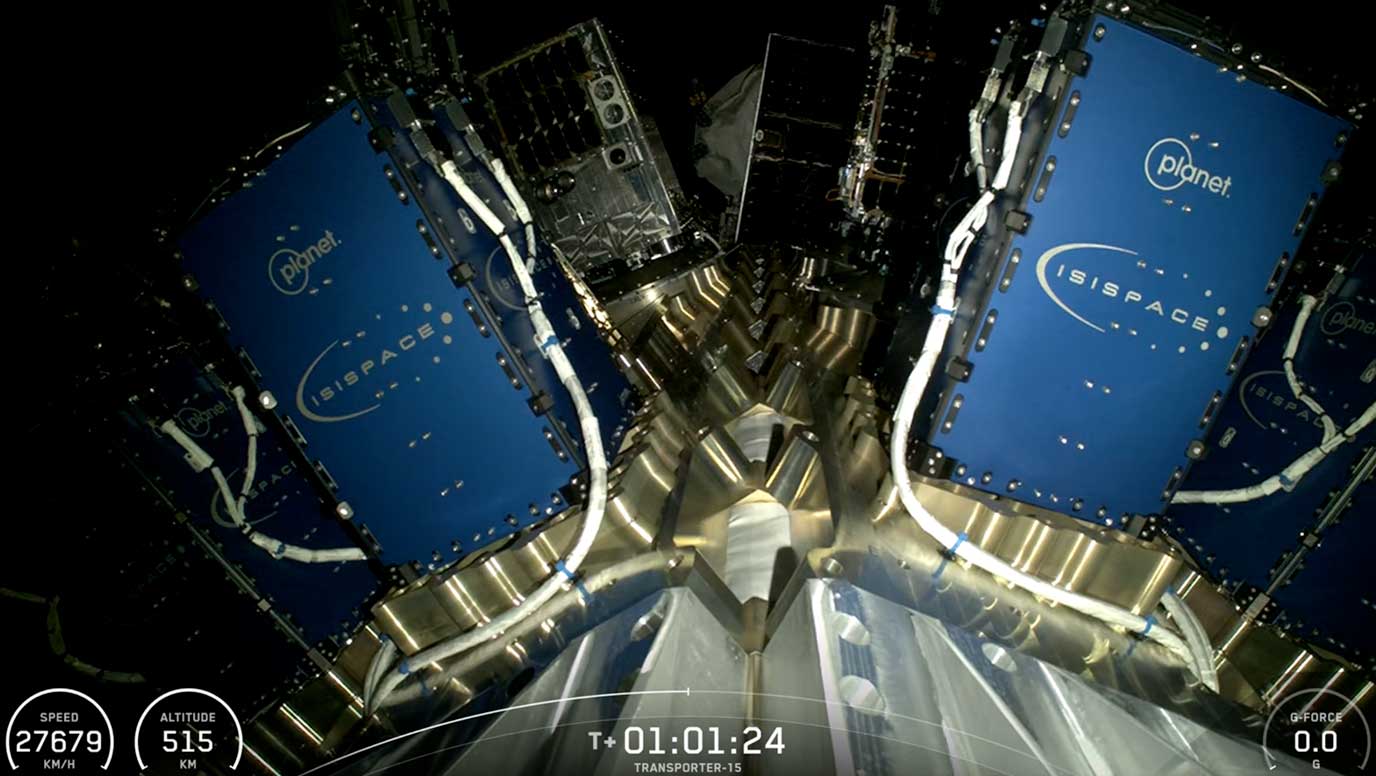
The SpeQtre satellite has launched on a mission to show that ultra-secure quantum communication technology from orbit could make cyber-attacks impossible.
While quantum computing promises breakthroughs in many areas, from medicine to finance, it also threatens to crack the encryption that currently protects everything from online banking to national security, the partners say.
SpeQtral in Singapore and RAL Space from the Rutherford Appleton Laboratory in Oxfordshire are steering the venture which would have had the writers of Star Trek ripping up their script!
Backed by £7 million of UK government funding, the new SpeQtre satellite will test quantum communication technologies from space that are so secure that any attempt to eavesdrop is instantly detectable.
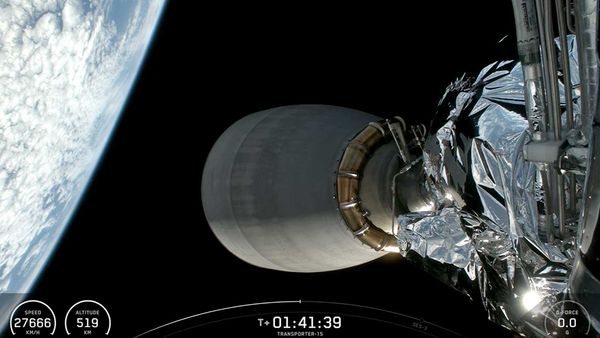
A collaboration between the UK’s Science and Technology Facilities Council (STFC), RAL Space in Oxfordshire and Singapore’s SpeQtral, SpeQtre has successfully launched from California on the SpaceX Transporter-15 rideshare mission.
It will explore how this technology, which uses unique properties of quantum particles to create encryption keys that cannot be intercepted without detection, could safeguard data from future cyber-attacks by next-generation quantum computers.
The spacecraft, containing SpeQtral’s space-qualified entangled photon pair source and detector modules was deployed into sun-synchronous orbit, marking a significant milestone for Singapore-UK space collaboration and quantum communications technology.
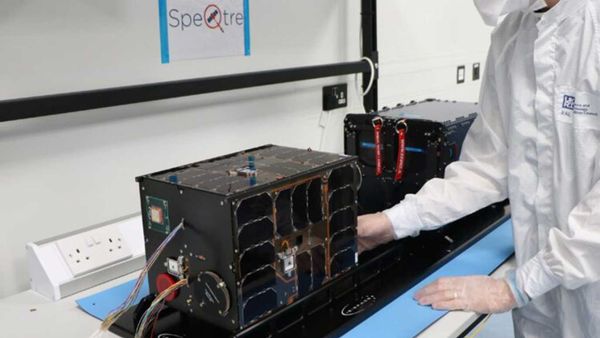
Experts from RAL Space have developed the instrument that will beam SpeQtre’s quantum signals to Earth, assembled the satellite hardware and ensured its readiness for space using their suite of environmental test facilities.
The SpeQtre satellite carries advanced quantum hardware designed by SpeQtral to explore secure space-based quantum communications. It represents a notably difficult technical challenge – demonstrating the exchange of quantum information from a CubeSat roughly the size of a microwave oven.
By scaling down this complex technology, the mission aims to reduce costs and improve accessibility for future quantum communication missions. SpeQtre will investigate various aspects of quantum communications from space, starting with fundamental validation of quantum components and progressing toward sophisticated quantum communication protocols.
Chune Yang Lum, CEO of SpeQtral said: "This mission represents years of collaborative development between our teams. We're taking a systematic approach that validates each aspect of the technology step by step, building toward increasingly ambitious quantum communications capabilities."
The mission builds on SpeQtral's previous space heritage, including involvement with the successful SpooQy-1 CubeSat mission that demonstrated an entangled photon pair source in space. The company has established strategic partnerships with major industry players including SES, Thales Alenia Space, and Hispasat to advance commercialisation of space-based quantum communications.
Andy Vick, Disruptive Technology Lead at RAL Space and UK Principal Investigator for SpeQtre said: “SpeQtre is the first satellite developed through our agile mission facility, and a credit to the teams who have worked hard to deliver the payload for launch. By approaching this mission with speed and creativity, they have already paved the way for more ambitious missions ahead, including future UK demonstrators. But for now, for SpeQtre, the real fun begins as we look forward to the beginning of our quantum experiments in space.”
Following deployment, the satellite platform will undergo commissioning over the coming months, involving activation and testing of all spacecraft subsystems. SpeQtral and RAL Space will then commission their respective quantum payload and optical system, with this phased approach ensuring thorough validation before progressing to quantum experiments and other out of band key delivery mechanisms. Quantum communications experiments are then expected to start in early 2026.
Unlike terrestrial fibre networks which are distance-limited, satellite-based systems provide quantum-secure communications across vast distances without requiring additional intermediary trusted repeater nodes.
The mission supports broader international efforts to establish quantum-secure communication networks, including the European Space Agency's INT-UQKD and Q-DESIGN programmes, highlighting global recognition of quantum communications as critical technology for future cybersecurity.
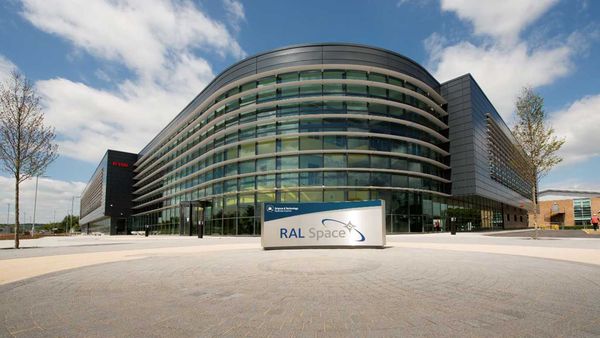
RAL Space is based at the Harwell Campus in Didcot and is the UK's national laboratory advancing the understanding of space and our environment for the benefit of all. It works with UK and overseas agencies, universities and industrial companies on space and ground based space projects. It employs more than 335 highly skilled staff in the heart of the Harwell Space Cluster and at the Chilbolton Observatory.