


Tech tortoise now a global hare as Gearset turbocharges steady start
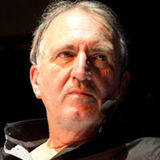
CEO Kevin Boyle tells Business Weekly that a lot of patience and pure hard graft were devoted in the early days to ensure Gearset was built to last.
As we recently reported, Gearset posted 37 per cent year-on-year revenue growth in 2025. So what has driven this latest phase of expansion?
Boyle says: “Part of what we’re seeing is a natural consequence of the Salesforce ecosystem maturing. Deployments are becoming more complex, technical debt accumulates over time, and AI-generated changes are adding further pressure. As environments scale, the cost of fragmented tooling and inconsistent processes becomes more visible.
“That shift is pushing large enterprise teams to look for greater architectural stability. Increasingly, customers have chosen Gearset as a single platform that brings deployment, testing, backup and monitoring together under clear governance.
“At the same time, we haven’t stood still. We’ve continued investing in engineering depth and platform breadth so that larger organisations can standardise on Gearset with confidence. That’s reflected in welcoming over 400 new customers globally, including 73 new enterprise clients, alongside expansion within our existing base.”
Gearset now supports more than 3,500 organisations worldwide. How have they managed to scale a global software business from Cambridge and what role has the Science Park played in that journey?
Boyle tells us: “We’ve always designed the business to operate at a global scale. Our customers have been distributed internationally from early on, so the focus has been on building robust systems, processes and teams that can support that reach from day one.
“Being based in Cambridge, and the Science Park specifically, provides us with three things. Software engineering talent, a culture that values building durable, globally relevant technology businesses, and a foundation to scale without losing focus on quality or discipline.
“Many of us also just love the quality of life that living in a green, cycling city affords us. It’s a place people want to stay and build meaningful careers.
“Our move to larger premises in the Park last year reflects that growth. As we’ve expanded internationally, being based here has helped us attract and retain engineers who understand complex DevOps challenges.”
Gearset has invested in AI capabilities and new product areas so how do these developments position the company for its next stage of growth?
Boyle says: “As Salesforce environments become more complex, especially with the rise of AI-generated code, teams need stronger guardrails and better visibility. Our investment in areas like observability, AI-driven insights and code analysis is about giving enterprises greater confidence in how they build and scale.
“We’re devoted to doing what feels best for our customers, giving them the choice to build AI into their workflows or opting out if not. We’re applying AI to clearly defined problems within the DevOps lifecycle, helping teams move faster while maintaining governance and architectural health. That focus positions us well for the next stage of growth, particularly as larger organisations standardise on a full-lifecycle platform.”
What does the next chapter look like for Gearset in Cambridge? Does the company expect further expansion locally?
Boyle shares: “Cambridge will remain central to our story. It’s where we were founded, and it continues to be our headquarters and spiritual home. As we grow globally, we expect to keep investing locally, particularly in roles that support our enterprise customers. The next chapter is all about deepening our platform and continuing to scale responsibly. If we keep building products that solve meaningful problems for large Salesforce teams, growth will follow.”
So at the outset, what problems were he and Matt Dickens trying to solve when they founded Gearset? Boyle recalls: “In 2015, Matt and I were both working at software company Redgate and we kept encountering the same issue when teams tried to update their Salesforce systems. Making changes was slow, manual and risky.
“Most companies use multiple versions of Salesforce - one for the daily running of a business and one for testing new features. Moving changes from this test system to the live one was complicated. When something went wrong, it would disrupt the business and fixing it was, more often than not, quite tricky.
“What struck us was that Salesforce itself was growing rapidly in strategic importance for organisations, but the tooling around how changes were managed hadn’t matured at the same pace. Development teams were being asked to deliver more, faster, but without the appropriate tools to do it safely and reliably. That’s why we founded Gearset – to give those teams a better way to manage change, and to bring more structure and confidence to that process.
“The early months were focused and fairly intense. When you move from being part of an established company to starting something from scratch, the safety net disappears and you become responsible for wearing many hats. Suddenly, I wasn’t just in charge of writing good code, but finding customers, setting direction and making sure the business is viable.
“Commercially, the challenge was earning trust. Salesforce teams were relying on processes that, while imperfect, were familiar. Convincing people to change how they manage deployments requires credibility and proof that the alternative is safer and more predictable, which takes time, naturally.
“Personally, it’s a shift in mindset. In a small founding team, every decision has visible consequences. There isn’t much room for error, so you learn quickly to prioritise well and stay close to reality.”
How did the founders finance the business in the early days and what were the biggest risks they were taking at that point?
Boyle confides: “In the very early stages the focus was on building something valuable before thinking about scale. We kept the team small and were deliberate about costs, making sure we were solving a real problem that customers were willing to pay for.
“Rather than trying to grow quickly the emphasis was on building a sustainable business with strong fundamentals. That discipline in the early days shaped how we’ve approached growth ever since.”