




Trinity Bradfield Prize highlights surge of CleanTech
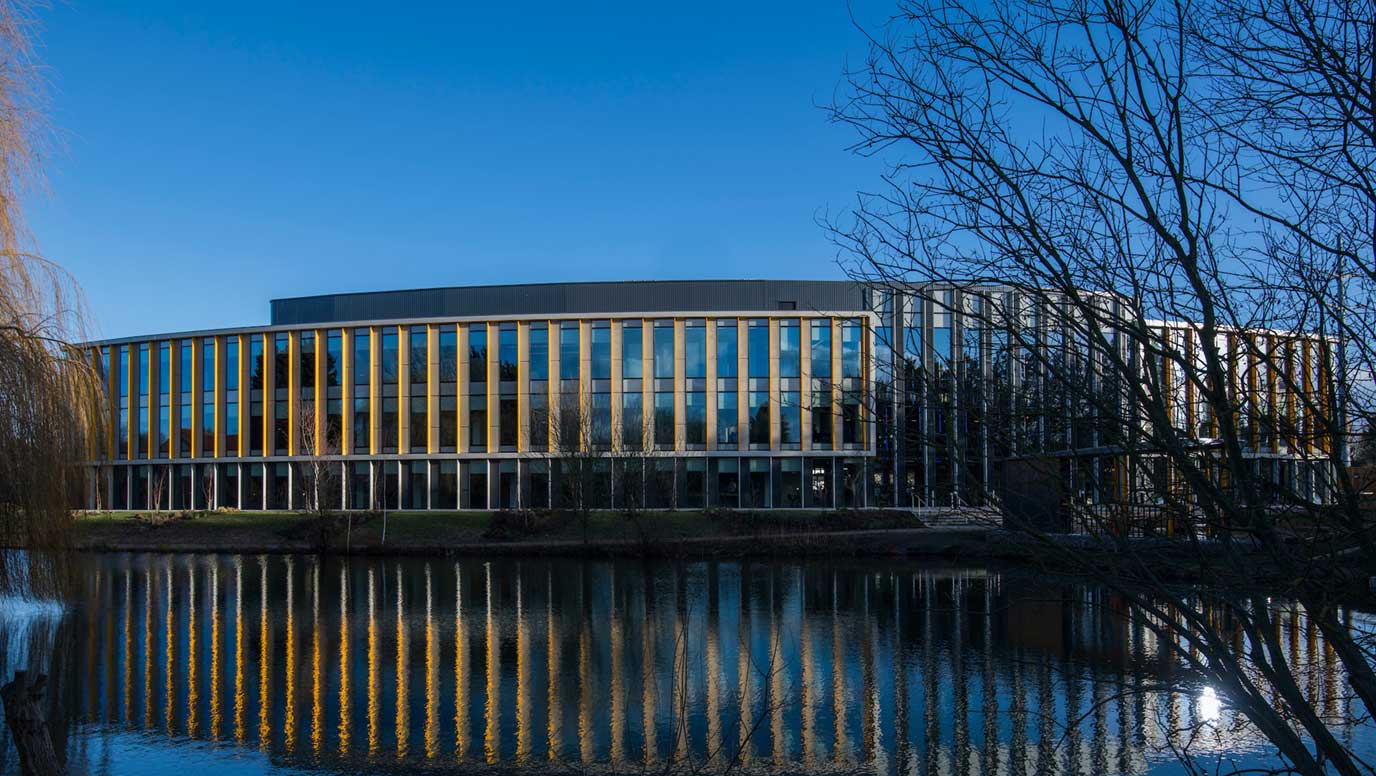
The Prize was founded in 2018 in memory Sir John Bradfield, who as Senior Bursar of Trinity College was responsible for the founding and development of Trinity Science Park under the Cambridge brand now celebrating its 55th anniversary.
Nobel Prize winner and former head of Trinity College, Sir Greg Winter was on hand to do the honours as the latest winners of the Trinity Bradfield Prize were unveiled at The Bradfield Centre last week.
The £10k 1st prize was won by Cambridge startup GreenMixes, which is developing carbon-negative admixtures that transform concrete into a climate solution. Concrete is responsible for more than eight per cent of global CO₂ emissions.
Its technology, developed by researchers from the University of Cambridge, uses biomass waste-derived materials to permanently store atmospheric carbon within concrete, turning the world’s most used material into a carbon sink.
The result is a scalable, drop-in additive that cuts emissions without compromising strength, cost, workability or process. By collaborating with industry partners, GreenMixes is helping the construction sector move from carbon-intensive to carbon-negative, one mix at a time.
Runnerups and each clinching £5k were Phaseshift – which provide send-to-end metasurface design and fabrication for, transforming complex optical systems into flat, lightweight, and multifunctional solutions - and Maricene which converts seaweed waste into renewable ethanol using salt-tolerant marine yeast, turning an abundant underused resource into clean biofuel.
The £10k Angel Prize went to Pinepeak, which was inspired by jet engine ignition research at the University of Cambridge. Its approach centres around a physics-driven model that is inherently stochastic, highly adaptable, and augmented by artificial intelligence.
This synergy results in a solution that is not only fast, cost-effective, and precise, but also holds a distinct competitive advantage. Notably, the technology excels in accurately simulating diverse terrains across the globe, including the intricate topographies of the wildland-urban interface.
The obtained data offers ultra-high granularity with unprecedented accuracy, enabling predictions at the scale of individual neighbourhood blocks down to specific properties.
The competition for the Prize aims to encourage and assist young scientists, engineers and entrepreneurs in the University of Cambridge to start companies capable of translating their ideas, inventions and discoveries into products.
Entry numbers were strong at well over 40 and all the applications were again at a very early stage. Sir Greg says he hopes that this competition will help them all take their ideas forward.