




Wayve raises fresh Series D cash to boost haul to $8.8bn
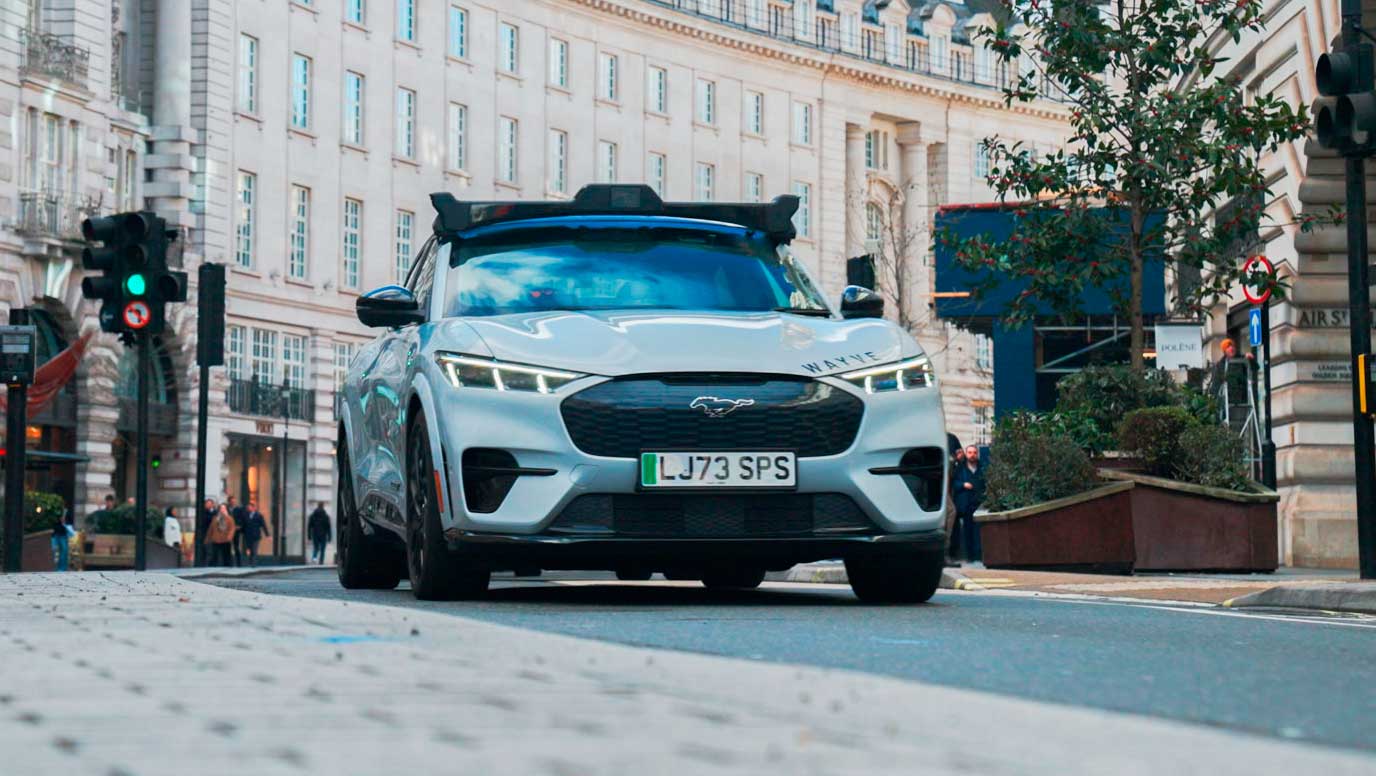
Wayve co-founder and CEO Alex Kendall completed his PhD at The University of Cambridge and heavy hitters among the investment cohort have Cambridge links. The latest round was led by Eclipse, Balderton and SoftBank Vision Fund 2. SoftBank is the major shareholder in Cambridge-anchored superchip architect Arm.
The fundraising brings in new investment from Ontario Teachers’ Pension Plan, Baillie Gifford, British Business Bank, Icehouse Ventures, Schroders Capital alongside investment global automakers Mercedes-Benz, Nissan and Stellantis. Microsoft which has strong Cambridge links, Arm partner NVIDIA, and Uber all participated, reflecting support for Wayve’s embodied AI as a foundational software layer for deploying autonomy at a global scale.
With his hands on a figurative wheel, Kendall has steered the company’s growth superbly since earning his PhD in Computer Vision and Robotics from the University of Cambridge, where he was a Woolf Fisher Scholar. He was also a Junior Research Fellow at Trinity College, Cambridge.
Uber says it will invest additional milestone-based capital to scale Wayve-powered robotaxi deployments globally, within the broader $1.5bn of capital secured to support commercial rollout.
Wayve will launch commercial robotaxi trials in 2026 and deploy supervised autonomy software in consumer vehicles from 2027.
It is the first and only AV company to drive zero-shot in over 500 cities across Europe, North America and Japan in a single year. Wayve pioneered the application of end-to-end AI to autonomous driving in 2017 and has since industrialised its safety-by-design architecture into a production-ready autonomy platform.
Wayve licenses its AI Driver directly to automakers, providing tools to customise driving models for specific vehicles and brands. The system runs entirely on onboard vehicle compute and embedded sensors, and doesn’t rely on high-definition maps or location-specific engineering.
By partnering with automakers and mobility platforms rather than vertically integrating, Wayve enables autonomy to scale globally with lower capital intensity. Wayve’s foundation model trained on globally diverse data spanning over 70 countries and a wide range of vehicle platforms, creating unmatched data diversity that allows autonomy to generalise to new markets.
End-to-end AI has shifted from a research bet to the industry’s chosen path for scalable autonomy. Wayve has spent nearly a decade pioneering this technology into a production-grade platform that can power any vehicle, anywhere. As the industry converges on end-to-end AI, Wayve is positioned to lead its global deployment.
Alex Kendall said: “With $1.5 billion secured, we are building for a total addressable market that spans every vehicle that moves. Autonomy will not scale through city-by-city robotaxi deployments alone. It will scale through a trusted platform that automakers and fleets can deploy globally and improve continuously.
“This investment accelerates our path to widespread commercial deployment and positions us to build the autonomy layer that will power any vehicle everywhere.”